Art therapy is one of the fastest-growing fields in mental health — and one of the most misunderstood. Here is everything you need to know about what it is, how it works, and who it helps.
If you have heard the term “art therapy” and wondered what it actually means — you are not alone. Many people picture an art class, or assume it is only for children. The reality is far richer, more rigorous, and more powerful than those assumptions suggest.
Art therapy is a recognized mental health profession that uses creative expression — visual art, music, movement, writing — as a primary therapeutic tool. It is practiced by licensed and certified professionals, grounded in psychological theory, and supported by a growing body of clinical research.
This guide explains what art therapy is, how it works, who it is for, and why it matters.
The Definition: What Art Therapy Actually Is
Art therapy integrates psychotherapeutic techniques with the creative process to improve mental health and overall well-being. The American Art Therapy Association defines it as a mental health profession in which clients use art-making — within a therapeutic relationship — to explore feelings, reconcile emotional conflicts, foster self-awareness, manage behavior, develop social skills, reduce anxiety, and increase self-esteem.
The key word is “therapeutic relationship.” Art therapy is not art class. It is not a hobby. It is a clinical intervention delivered by a trained professional in a structured, intentional setting.
How Art Therapy Works
Art therapy works on multiple levels simultaneously. On a psychological level, creative expression provides a way to externalize internal experiences — to take something that feels overwhelming and give it form, shape, color, or sound. This process of externalization is itself therapeutic: it creates distance, perspective, and the possibility of reflection.
On a neurological level, art-making engages the brain’s sensory and motor systems in ways that verbal therapy does not. For individuals who have experienced trauma — where the brain’s language centers are often suppressed — art therapy offers an alternative pathway to processing and healing.
On a relational level, the therapeutic relationship between client and art therapist provides a container of safety and trust within which difficult material can be explored. The art therapist does not interpret the work for the client; rather, they facilitate a process of self-discovery.
Types of Art Therapy
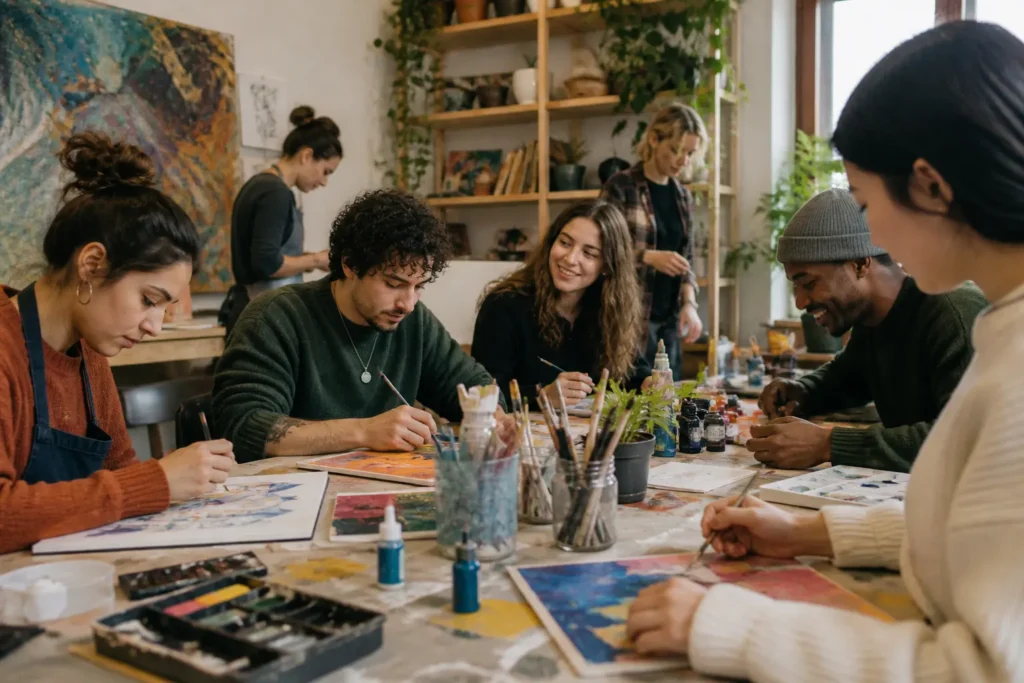
Art therapy encompasses a wide range of creative modalities. Visual art therapy uses drawing, painting, sculpture, collage, and mixed media. Music therapy uses listening, composing, songwriting, and musical improvisation. Movement or dance therapy uses the body as the primary medium of expression. Drama therapy uses role-play, storytelling, and theatrical techniques. Writing therapy uses journalistic, poetic, and narrative forms.
At USMI, our programs incorporate visual art, music, and movement — often in combination — tailored to the specific needs and contexts of the communities we serve.
Who Art Therapy Helps
Art therapy is effective across a remarkably broad range of populations and conditions. It has been used successfully with trauma survivors, veterans with PTSD, children in foster care, adults with depression and anxiety, individuals experiencing grief and loss, people with chronic illness, and communities recovering from collective trauma.
“David, a former soldier, carried deep emotional scars from years of conflict. Through painting classes, he learned to express his struggles on canvas. His artwork transformed from dark, chaotic strokes to vibrant and hopeful images — mirroring his healing journey.”— David, Art Therapy Participant at USMI
Art therapy does not require artistic skill or prior experience. It requires only a willingness to engage — with the materials, with the process, and with the trained professional who guides the work.
Art Therapy vs. Art Education: What Is the Difference
This is one of the most common points of confusion. Art education focuses on teaching skills, techniques, and artistic knowledge. The goal is the development of artistic ability and creative expression as an end in itself.
Art therapy focuses on psychological well-being. The artwork created in therapy is a means, not an end. Its quality — by conventional aesthetic standards — is entirely irrelevant. What matters is the process: what it reveals, what it releases, and what it makes possible.
Art therapists hold graduate-level degrees in art therapy or related fields, and are trained in both studio art and clinical psychology. This dual expertise is what distinguishes them from art teachers, recreational therapists, or art instructors working in clinical settings.
Is Art Therapy Evidence-Based?
Yes. The evidence base for art therapy has grown substantially in recent decades. Studies have documented its effectiveness in reducing symptoms of PTSD, anxiety, and depression; improving quality of life for individuals with chronic illness; supporting cognitive function in older adults; and promoting emotional regulation in children and adolescents.
Research using neuroimaging has shown measurable changes in brain activity and stress hormone levels following art therapy interventions — providing biological evidence for outcomes that clinicians and clients have long reported anecdotally.
Art Therapy at USMI
At USMI, art therapy is not a supplementary program. It is central to everything we do. Our certified therapeutic facilitators deliver one-on-one and group sessions using visual art, music, and movement — all within a trauma-informed, culturally responsive framework.
Our programs are free to participants. We serve veterans, survivors of trauma and abuse, youth in foster care, and underserved creatives across five continents. Every program is designed not just to provide relief, but to build lasting resilience — the kind that stays with a person long after the session ends.
Want to support free art therapy for underserved communities?Support USMI
How to Access Art Therapy
If you or someone you know could benefit from art therapy, there are several pathways to access. Licensed art therapists practice in hospitals, schools, community mental health centers, private practices, and nonprofit organizations like USMI.
If you are in a community USMI serves, we encourage you to reach out through our contact page. If you are outside our service area, we recommend searching for a licensed art therapist through professional association directories in your region.
Art therapy works. The science supports it. The stories confirm it. And at USMI, we have seen it transform lives — one session, one brushstroke, one song at a time.